

One of the questions we’re sometimes asked is whether a wooden climbing frame has a problem if the timber looks slightly bowed, damp, discoloured or develops dark marks.
It is an understandable concern. A climbing frame is a substantial investment, and when you see a change in the timber—particularly on a new product—it is natural to wonder whether something is wrong.
The good news is that timber is a natural material, and changes in appearance and shape can occur as it responds to moisture, temperature and the surrounding environment.
At Active Garden, we have been supplying and installing outdoor play equipment for more than 22 years, and questions about the natural characteristics of timber are something we regularly discuss with customers.
Quick Answer
Yes, some natural movement, bowing, cracking and changes in colour can occur in outdoor timber. Timber responds naturally to changes in moisture and weather conditions, and pressure-treated timber may also contain moisture when it is first supplied.
A slight bow in a timber component before installation does not necessarily indicate a problem. Once the climbing frame is assembled correctly and the timber is secured according to the manufacturer’s instructions, the structure brings the individual components together as designed.
Cracks that appear or develop after installation are also often the result of changes in weather conditions and moisture levels, as timber naturally expands and contracts.
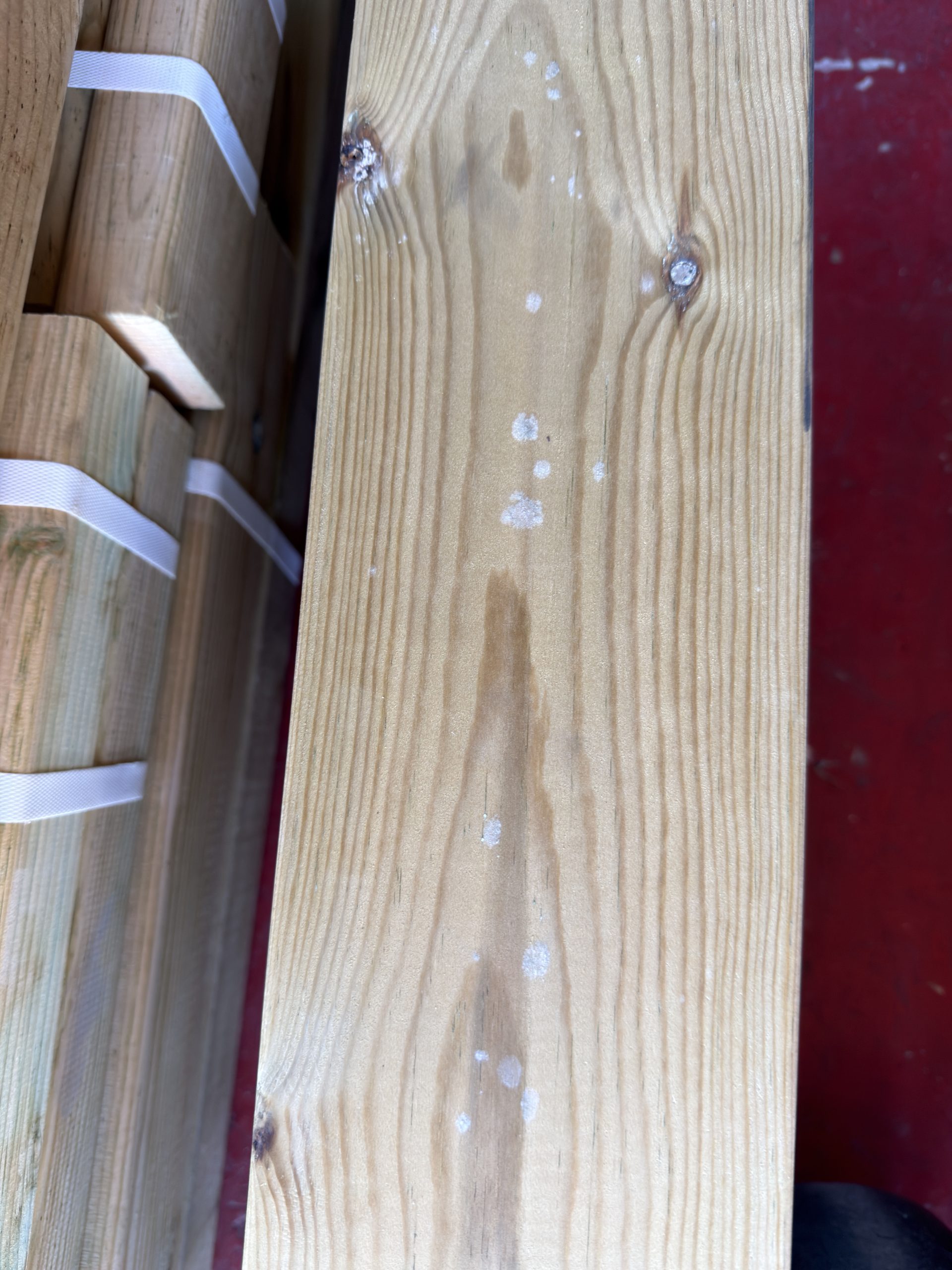
Dark or fluffy marks can sometimes be caused by surface mould or natural discolouration, particularly when timber has been exposed to damp conditions.
However, if you have any concerns about the condition of your climbing frame or a particular timber component, please contact us and we will be happy to advise you.
Why Can Climbing Frame Timber Bow?
Wood is a natural material and naturally responds to its environment.
As moisture levels change, timber can expand, contract and move. Different parts of a piece of timber can dry at different rates, which can result in some natural bowing or movement.
This can be particularly noticeable when timber is first delivered.
Does bowed timber mean the climbing frame is faulty?
Not necessarily.
A timber component can have some natural movement before the climbing frame is assembled without this meaning that the climbing frame is defective.
The important thing is how the component performs during installation.
The timber is designed to be assembled and secured according to the manufacturer’s instructions. Once the structure is correctly assembled, the components are held in their intended positions by the fixings and the overall construction of the climbing frame.
If you are building your climbing frame and a component appears unusual or you are unsure whether it is correct, don’t force it into position. Contact us and we can advise you.

Why Does New Pressure-Treated Timber Sometimes Look Wet?
This is another question we regularly receive.
Pressure-treated timber can contain a relatively high moisture content when it is supplied. The treatment process introduces preservative into the timber, and the wood then gradually adapts to the conditions in which it is installed.
Once outside, the timber is exposed to:
- Rain
- Sunlight
- Temperature changes
- Humidity
- Dry periods
- Seasonal weather changes
As the moisture content changes, the timber naturally responds.
It may therefore look different a few weeks or months after installation than it did when it was first delivered.
This does not automatically mean there is a problem with the timber.
What About Cracks and Splits in the Timber?
Small cracks or splits can occur naturally in outdoor timber, particularly after the climbing frame has been installed and the timber is exposed to changing weather conditions.
Timber naturally gains and loses moisture. During periods of hot, dry weather, for example, the timber can dry out, while wetter conditions can cause it to absorb moisture again.
These changes can result in natural movement, including cracking.
This is one of the characteristics of using a natural material such as wood outdoors.
Should cracks always be a concern?
No—but they should be looked at in context.
A small natural crack does not automatically mean that the timber has failed, that the climbing frame is unsafe or that it affects the structural integrity of the equipment.
However, if you notice a crack that looks unusually large, appears to affect an important structural component, is associated with movement, or simply causes you concern, please contact us.
We would always rather a customer ask us than worry about something unnecessarily.
Why Can Dark Marks or Mould Appear on Timber?
Dark marks on timber can have several possible causes, so it is important not to assume immediately that the timber is defective.
Surface mould can develop on damp timber, including treated timber, when environmental conditions are suitable.
This can be particularly noticeable after periods of wet weather or where timber has remained damp and has not been able to dry effectively.
Surface mould is not the same thing as timber rot.
Pressure treatment is designed to protect the timber against wood-destroying organisms, but it does not necessarily prevent every type of surface mould or discolouration from appearing.
If you see dark marks on your climbing frame, the first step is not to panic. Look at the overall condition of the timber and consider the conditions it has been exposed to.
If you’re unsure what you’re seeing, send us a photograph and we will be happy to advise you.
Can I Change or Refresh the Appearance of My Climbing Frame?
Yes. The appearance of outdoor timber will naturally change over time, but you don’t have to accept the weathered appearance if you would prefer to maintain or refresh the look of your climbing frame.
At any point during the life of the equipment, you can use a suitable water-based exterior timber treatment to refresh the appearance of the timber, help maintain a particular colour or even change the colour of the climbing frame.
For example, if you like the appearance of your climbing frame when it is newly installed, an appropriate timber treatment can help you maintain that look as the timber weathers.
Equally, you may decide that you would prefer to change the appearance after several years—for example, giving the timber a darker or different colour.
What products do Active Garden recommend?
We have had good experience with Protek water-based exterior timber treatment products, which are available in a range of colours and finishes suitable for outdoor timber.
Our recommendation of Protek is based on our experience with their products and is not sponsored or paid for by Protek.
Before applying any treatment, always check that the product is suitable for the particular timber and equipment, and follow the product manufacturer’s preparation and application instructions.
It is particularly important that the timber is appropriately prepared and dry before treatment.
Please follow the product’s manufacturer’s instructions.
Can treatment make an old climbing frame look new again?
A suitable treatment can refresh and improve the appearance of weathered timber, but the result will depend on the existing condition of the wood.
Heavily weathered timber may need cleaning and preparation before treatment, and the finished appearance will naturally depend on the timber’s age, condition and previous exposure to the weather.
The important point is that you can change or refresh the appearance of a wooden climbing frame throughout its life. You don’t have to live with the natural weathered colour if you prefer something different.
What Should I Do If I Notice Changes in My Timber?
First, remember that outdoor timber naturally changes over time.
Look at the overall condition of the climbing frame rather than focusing only on one small change in appearance.
Check:
- Are the fixings secure?
- Is the structure stable?
- Does the timber feel sound?
- Are there any signs of deterioration?
- Has the timber simply changed colour or developed a small natural crack?
- Is the equipment still assembled and functioning as intended?
If you are unsure, contact Active Garden before attempting to repair or alter anything yourself.
We can often help customers understand whether what they are seeing is a normal characteristic of outdoor timber or something that needs further investigation.
Why Maintenance Is Important
Correct installation is only the beginning of looking after a wooden climbing frame.
Anchoring and maintenance are two aspects that are very often overlooked.
Once the climbing frame is installed, it is important to inspect it regularly and make sure that:
- Fixings remain secure.
- Ground anchors remain secure.
- Timber remains in good condition.
- Slides and other components remain properly attached.
- Swing equipment and fixings are checked.
- Any unusual movement is investigated.
- The surrounding area remains suitable for use.
Regular maintenance helps identify small issues before they become bigger ones and contributes to the long-term life of the climbing frame.
For commercial play equipment, inspection and maintenance are particularly important because the equipment can experience a much higher level of use.
What We’ve Learned After More Than 22 Years
After more than 22 years supplying and installing climbing frames, one of the most important things we’ve learned is that customers sometimes expect timber to behave like a manufactured material that will remain exactly the same throughout its life.
It won’t.
Timber is natural.
It responds to:
- Rain
- Sun
- Heat
- Cold
- Humidity
- Dry weather
- Seasonal changes
It can therefore change colour, develop small cracks and move slightly as its moisture content changes.
This doesn’t mean that every change should simply be ignored. Understanding what is a natural characteristic and knowing when to ask for advice is the important part.
If you’re concerned about the appearance or condition of your climbing frame, please contact us. We have many years of experience with outdoor timber and will always do our best to help you understand what you are seeing.
Common Questions About Timber Climbing Frames
Is it normal for climbing frame timber to bow before installation?
Yes. Some natural movement or bowing can occur in timber before installation and does not necessarily indicate a problem. The components are designed to be assembled and secured according to the manufacturer’s instructions.
If a component does not appear to fit correctly or you are unsure how to proceed, contact us rather than forcing it into position.
Can pressure-treated timber develop cracks?
Yes. Timber naturally responds to changes in moisture and weather conditions, and cracking can occur as it dries and changes over time.
Why did my timber crack after installation?
Cracking after installation is generally associated with changes in weather conditions and moisture levels. Periods of hot or dry weather can cause timber to lose moisture, while wetter conditions can cause it to absorb moisture again.
If you have any doubts about a crack, please contact us and we will advise you.
Can pressure-treated timber develop mould?
Yes. Surface mould can sometimes develop on treated timber when conditions are damp and suitable for mould growth. This does not automatically mean that the timber is rotten or defective.
Does a change in colour mean my timber is deteriorating?
Not necessarily. Outdoor timber naturally changes colour as it is exposed to sunlight and weather. Colour change alone does not necessarily indicate a structural problem.
Will my climbing frame change colour over time?
Yes. Outdoor timber naturally weathers and its colour can change as it is exposed to sunlight, rain and changing weather conditions.
Some customers like this natural weathered appearance, while others prefer to maintain the original look or change the colour.
Can I treat my climbing frame to maintain or change its colour?
Yes. A suitable water-based exterior timber treatment can be used to refresh the appearance of outdoor timber, maintain a particular colour or change the colour.
We have had good experience with Protek products, although our recommendation is not sponsored or paid for by Protek. Always check that the treatment is suitable for your timber and equipment and follow the manufacturer’s instructions.
What should I do if I’m worried about my climbing frame timber?
Contact us.
Send us photographs if possible and explain what you have noticed. We can advise you on whether the appearance is consistent with normal timber characteristics or whether further investigation is recommended.
Expert Tip
Don’t judge the condition of a wooden climbing frame by appearance alone.
Natural timber can move, crack and change colour as weather conditions change. Look at the overall condition of the equipment, its stability, fixings and structural components.
And if you’re unsure—ask us.
We would always rather answer a customer’s question than have them worry unnecessarily about something that may simply be a natural characteristic of timber.
About the Author
Marianela @ Active Garden
Marianela has been helping families, schools, nurseries and commercial customers choose outdoor play equipment since Active Garden was established in 2004.
Working alongside the Active Garden team, she regularly answers questions about climbing frames, playground equipment, timber, safety surfacing, installation and maintenance. The Active Garden Knowledge Centre shares practical advice based on real customer questions and more than two decades of experience supplying and installing outdoor play equipment.
About Active Garden
Established in 2004, Active Garden supplies residential and commercial outdoor play equipment to customers across the UK.
Our range includes wooden climbing frames, swings, slides, commercial playground equipment and safety surfacing, with professional installation available for many projects.
We believe customers should be able to make informed decisions about their outdoor play equipment, which is why our Knowledge Centre is built around the questions we are asked every day.
Related Articles
- Do I Really Need to Concrete My Climbing Frame Into the Ground?
- Residential vs Commercial Play Equipment: What’s the Difference?
- How to Choose the Right Climbing Frame for Your Garden

